Cry Me a River, Max Blumenthal Saturday, Jun 23 2012 

By Sharmine Narwani

Imagine: Max Blumenthal can write anything he wants at Al Akhbar…so he quits.

Max Blumenthal resigned this week from Al Akhbar English in a public blogpost – classy. In it, Max makes spurious claims against one of the better-regarded daily publications in the Arab world, accusing the Lebanese paper of toeing a pro-Assad line, and naming myself, commentary writer and academic Amal Saad-Ghorayeb and Editor-in-Chief Ibrahim el-Amine as the main perpetrators of this “crime.” “Courageous,” is how he portrays Al Akhbar, before joining as a blogger last year.  I, like Max, joined Al Akhbar precisely because of its reputation as a paper dedicated to exposing corruption, advancing pluralism, showcasing superb investigative reporting, and fundamentally opposing imperialism.

Max is entitled to his opinion, but he over stretches throughout his tirade. “I recently learned of a major exodus of key staffers at Al Akhbar caused at least in part by disagreements with the newspaper leadership’s pro-Assad tendency,” says Max from his perch in New York. The events in Syria have been a contentious issue for many in the Middle East, including within the various regional media outlets.  And while a few staffers departed Al Akhbar perhaps partially over this issue, they have also done so at other media – Al Jazeera most notably. Max doesn’t seem to know that this issue is dated where Al Akhbar is concerned – the few who left did so well before I started writing for their English website in November 2011, and many of our writers who are critical of the Syrian government stay on and pound out their opinions on a daily basis – both in Arabic and in English. What Max fails to note – probably because he has absolutely no knowledge of the inner workings of the paper from his vantage point across the Atlantic – is that the Syrian government has even periodically inhibited Al Akhbar staff from entering the country. (more…)

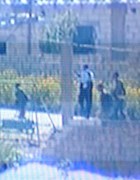
Surprise Video Changes Syria “Timeline” Wednesday, Apr 4 2012 

By Sharmine Narwani

Of all the myths obstructing the honest portrayal of events in Syria this past year, none has been more fiercely guarded by regime-change advocates than this one stark falsehood:

Myth – the Syrian regime has been shooting only unarmed, peaceful protestors until very recently when opposition groups finally decided to arm themselves in self-defense.

On the contrary, there is clear evidence that armed groups have targeted and killed security forces and civilians from within weeks of the first small protests in March 2011. An earlier investigative piece I wrote on the Syrian casualty lists identifies the shooting deaths of nine Syrian soldiers in Banyas on April 10, 2011 as one important timeline marker for premeditated opposition violence.

Ignoring this vital piece of information about the security landscape has helped shape a fundamentally flawed narrative of events in Syria. Furthermore, this false storyline has directly contributed to the escalation of the crisis by inciting rage against the “one-sided” violence of the regime, and emboldening opponents with a misplaced “righteousness” that kills legitimate debate on Syria.

But this narrative has been unraveling in the past few months. Photos and video footage of armed men with heavy weapons proudly declaring their stripes – some of them religious extremists advocating the killing of civilians based on sectarian differences – have been recently making the rounds.

Jihadist web chatter about armed groups in Syria, suicide bombings in Damascus and Aleppo, and now Al Qaeda’s “call to battle” have forced western pundits – who know a red line when they see one – to grudgingly acknowledge there are two sides in Syria’s violent tug of war.

Quite suddenly, this has forced a shift in the discourse on Syria. Regime opponents have taken care, however, to ensure that the new narrative incorporates the existence of armed groups without challenging the core premise that “the regime massacres peaceful protestors.”

This effectively means that armed opposition can only be introduced into the Syrian crisis “timeline” at a date long after the outbreak of protests. (more…)

Follow

Get every new post delivered to your Inbox.

Join 3,394 other followers